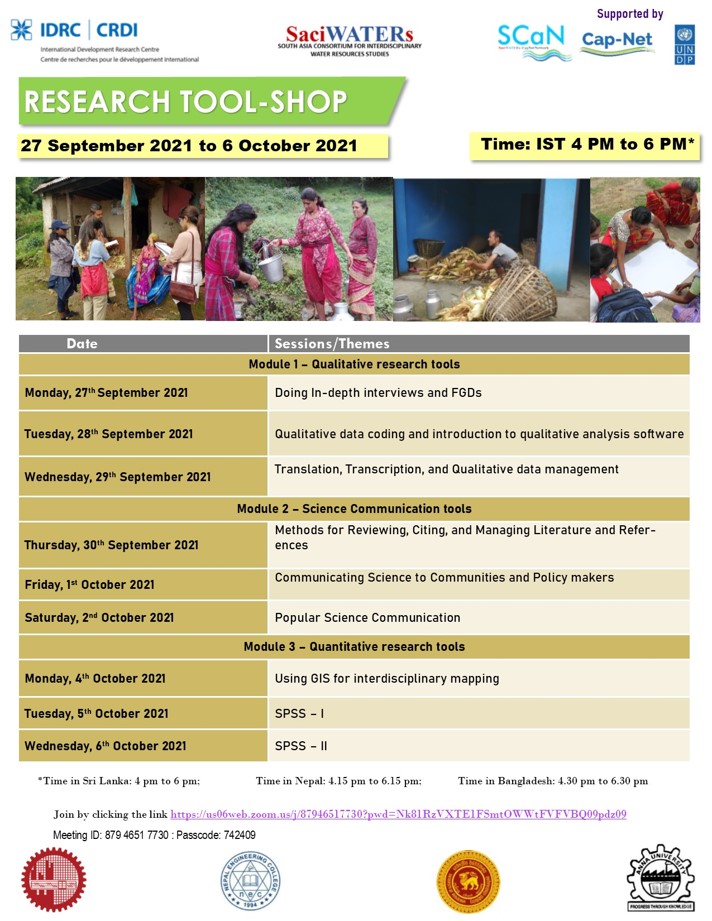






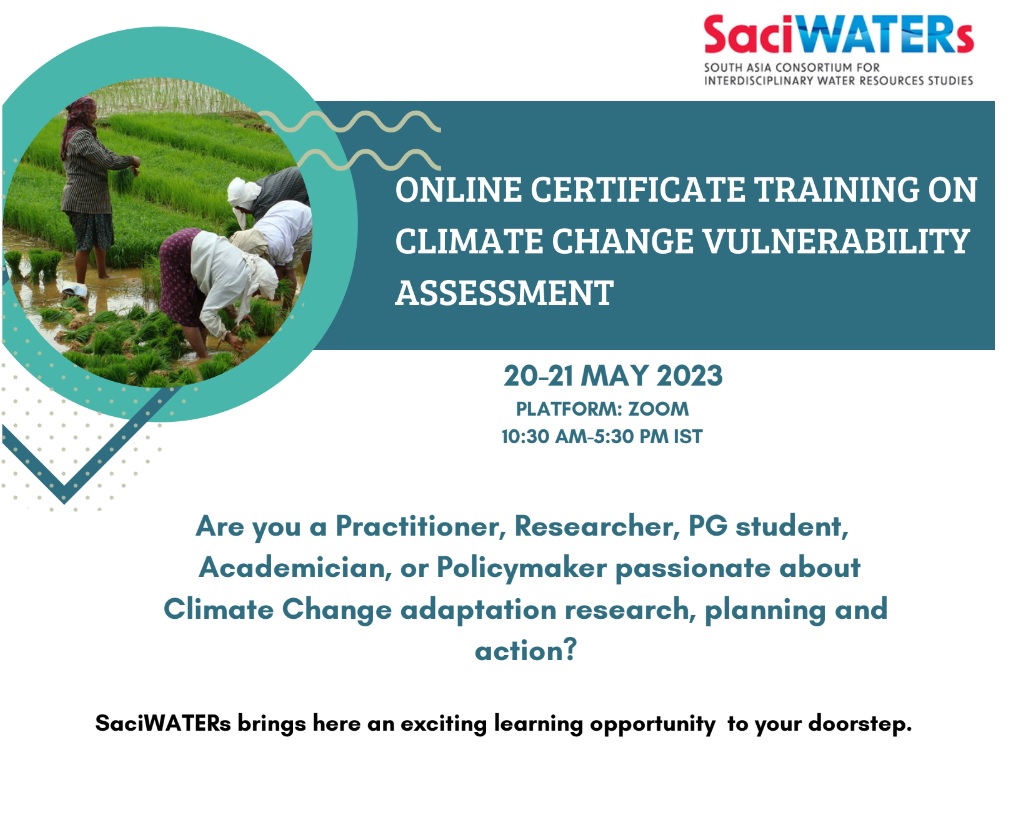
Online Certificate Training on Climate Change Vulnerability Assessment.
"Contributing Towards a Water Secure South Asia"
South Asia is endowed with vast water resources, yet the struggles around water scarcity and unequal access are perpetual. Global processes of urbanization and climate change are further contributing to this profound water insecurity. This challenge demands a holistic and integrated approach. SaciWATERs aims to achieve water security in South Asia through a holistic pro-poor human development approach.
SaciWATERs, the South Asia Consortium for Interdisciplinary Water Resources Studies, is a policy research institute based in Hyderabad, India. From its inception in 2001, it has focused on critical issues related to water resources management in south Asia. A key endeavour at SaciWATERs has been to enhance the dominant water resources management paradigm in the region with a consideration of all issues using a pro-poor human development approach. The emphasis is on the accumulation of new knowledge through a combination of research, capacity building, and advocacy. Accordingly, it partners with universities and academic institutions from across global north and south to fundamentally reshape water resources knowledge systems in south Asia.
|
Join our Networks
|
|
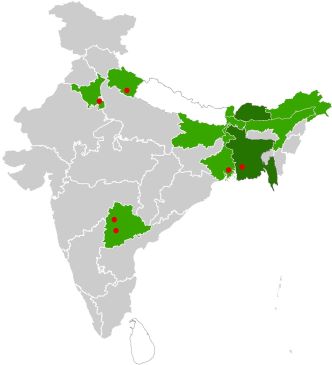
Water systems are typically complex, with the relationship between water and development being particularly dynamic. In this context, conflicts are increasingly determining the interactions between water policy and governance. Working in partnership, SaciWATERs focuses on the characteristics of water institutions in South Asia, evaluates their influence on reform processes, analyses disputes over divergent water uses and assesses the impact of salient actors in promoting or obstructing institutional change. Project under theme |
|
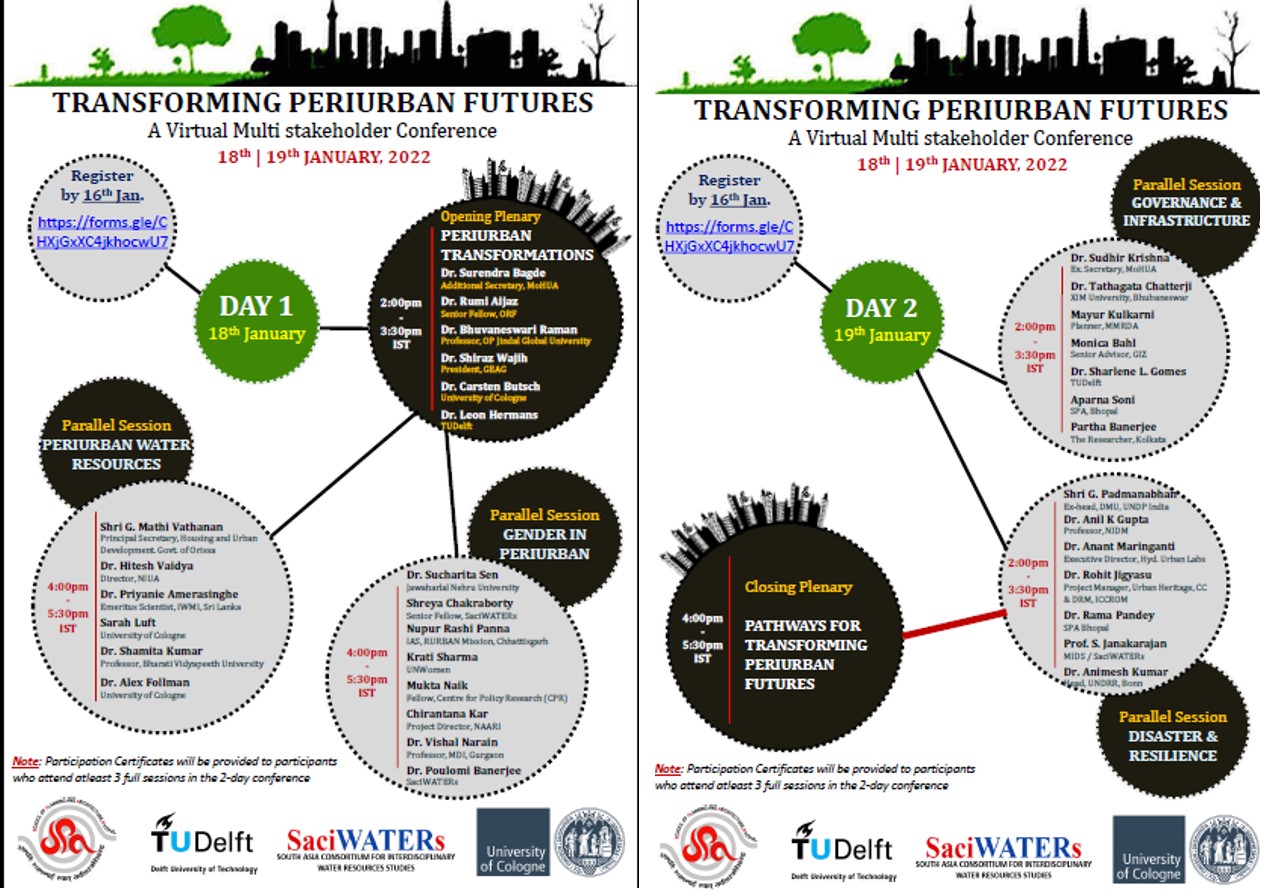
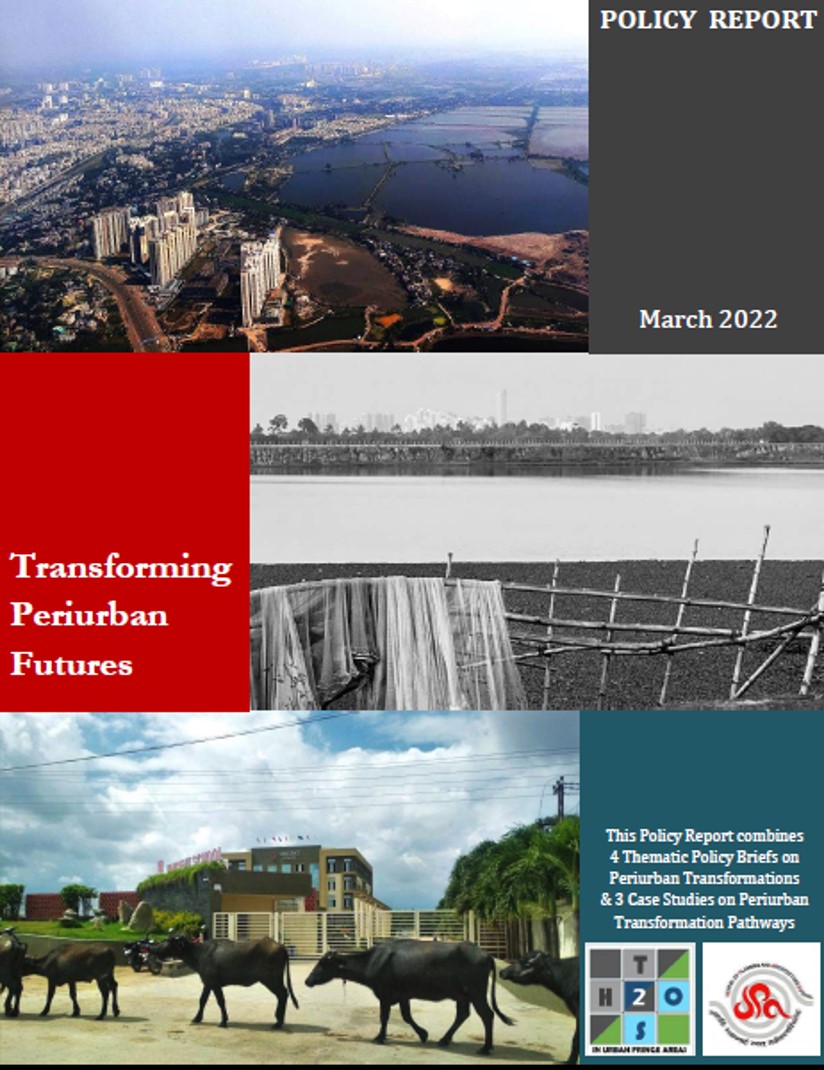
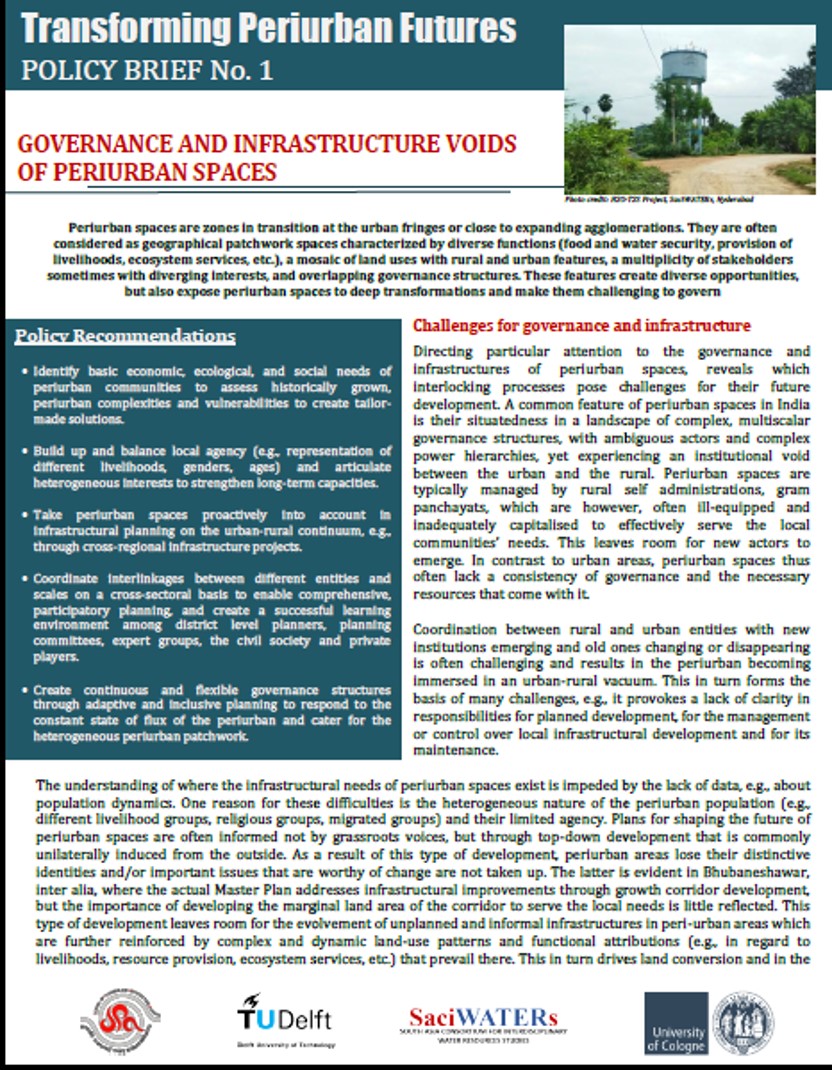
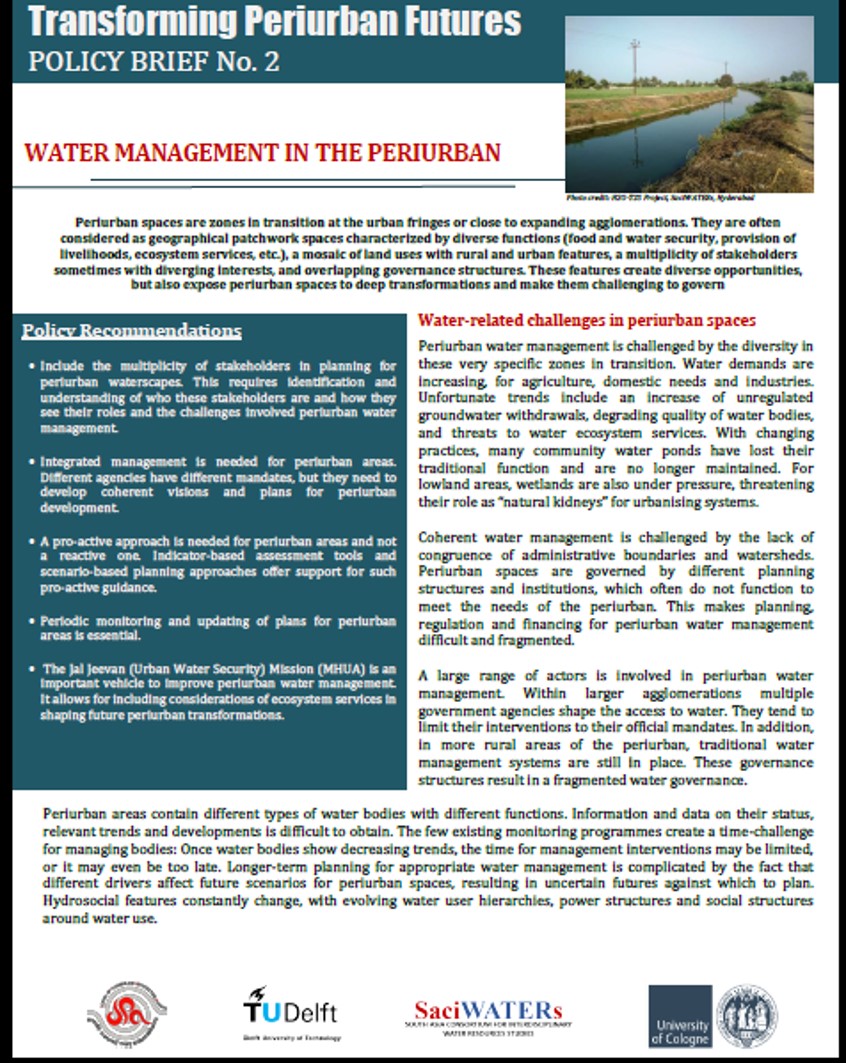
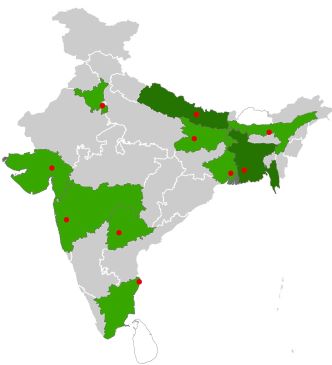
The expansion of the urban metropolises into rural regions has led to the creation of buffer zones or peri-urban regions around these big cities. These zones experience a unique process of urbanization that alters the dynamics of migration, employment and, most importantly, the use of natural resources. Recognizing this as a significant area of research, SaciWATERs works with partners to study the peri-urban areas of some major cities of South Asia. In particular, the change in water use strategies, water governance structures, water pollution, and spatial flows of water are being studied. Project under theme |
|
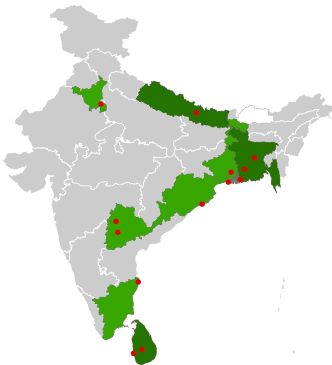
Climate change events in the region, coupled with population growth, are degrading natural resources while making South Asia particularly vulnerable to conflict. As climate change impacts finely balanced social, economic and ecological systems adversely, ripple effects are already being felt in terms of negative pressures on food security, livelihood security and energy security. Acknowledging this, SaciWATERs works to transform existing paradigms in natural resource management, simultaneously considering climate change mitigation and adaptation with food, energy and livelihood optimization strategies. Project under theme |
|
The fundamental role of women in the communal and household management of water resources is now widely accepted. However, unequal access to and control over these resources remains a continuing dilemma. SaciWATERs endorses a better understanding of the complex issues underpinning water and gender, with the aim of improving women’s access and choices related to water. Project under theme |
|
Despite massive interventions, basic access to safe drinking water and effective, equitable and sustainable delivery of sanitation remains a major challenge throughout most of South Asia. Initiatives at both the policy and institutional levels have fallen far short of meeting these critical needs in the region’s eight countries. The lack of independent studies on a sufficiently representative scale is further exacerbating the problem of correctly assessing ground realities. Recognizing the importance of the issue, SaciWATERs is developing an inclusive, crosssectoral strategy. Project under theme |
|
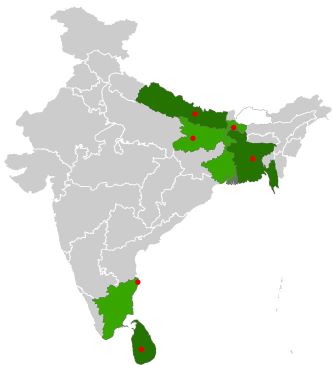
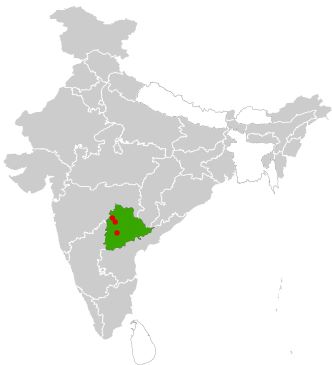
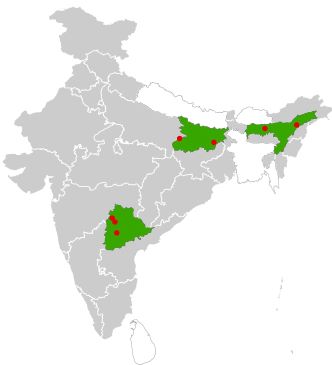
Water Quality is one of the emerging areas of work which is acquiring significance given the need for safe drinking water. Apart from biological contaminants which make drinking water unsafe, chemical contaminants like arsenic, fluoride and other heavy metals etc. pose serious public health concerns. SaciWATERs engages with multiple stakeholders across government, civil society and market in domain of water quality in general and with arsenic contamination in particular with a view to enabling and improving access to safe drinking water for the affected communities. Project under theme |
Mr Avinash Yadav Kumar delivered three lectures at the training on District Level Planning for Faecal Sludge Management (FSM) in Rural Areas organised by Center for Science and Env
Dr Laxmi Vadapalli delivered talk on 'Social Security Measures in Climate Change Affected Areas' in program on 'Effects of Extreme Climate Events on Labour in Telangana: Challenges
Mr. Avinash Yadav Kumar, Senior Fellow, SaciWATERs presented a poster with Dr. Christopher Hyun at the 42nd WEDC International Conference on "Equitable and Sustainable WASH Service
Webinar-Prithvi Ram was presenting on Youth in Agriculture and Strategy of Doubling Farmers income. The Event was organised under the support of ICAR-Central Institute of Fisheries
Shreya Chakraborty was invited to speak on a panel on the "Impact of Climate Change on Women" by the British Deputy High Commission on the 6th March 2020 at Taj Deccan, Hyderabad.
National consultation on "sustainable urban water management systems" in New Delhi on November 25 - 27, 2019. Shreya presented a comparative analysis of periurban water management